Apple’s biggest AI moment in years is just days away. On June 8, the company kicks off its annual developer conference, WWDC 2026, and nearly everything points to the same headline: the long-promised, completely rebuilt Siri is finally arriving — and this time it’s powered by Google’s Gemini.
After watching ChatGPT, Claude, and Google’s own Gemini race ahead for two straight years, Apple is about to make its boldest AI move yet. Here’s everything we know going in, what’s actually changing, and why it matters for anyone who owns an iPhone.
When and where it’s happening
WWDC 2026 runs from June 8 to June 12, with the all-important keynote on Monday, June 8 at 10 a.m. Pacific Time (1 p.m. Eastern, 6 p.m. UK). You can watch it free on Apple.com, the Apple TV app, or Apple’s YouTube channel — no ticket required.
The keynote is expected to unveil the next versions of every Apple operating system: iOS 27, iPadOS 27, macOS 27, watchOS 27, tvOS 27, and visionOS 27. Developers get early test versions the same day, and the public release typically lands in September. So while the reveal is June 8, most people won’t have the new Siri on their phone until the fall.
The headline: a new Siri running on Google’s Gemini
For years, Siri has felt frozen in time while rival assistants got dramatically smarter. That’s about to change — but in a way almost nobody predicted a couple of years ago.
According to extensive reporting by Bloomberg’s Mark Gurman, the rebuilt Siri will run on a custom model based on Google’s Gemini technology. Crucially, Apple says it will process those requests through its own Private Cloud Compute system rather than sending them straight to Google’s servers — Apple’s way of keeping its privacy promise intact while borrowing a rival’s brain.
The two companies confirmed the partnership jointly in January 2026. Bloomberg reported that Apple is paying Google roughly $1 billion a year for access to a custom model with about 1.2 trillion parameters — roughly eight times larger than Apple’s own current foundation model. In plain terms: Apple decided it was faster and smarter to rent the best engine available than to keep struggling to build one in-house.
What the new Siri will actually be able to do
This is the part that affects your daily life. Based on reporting from MacRumors, 9to5Mac, and others, here’s what the upgraded Siri is expected to handle:
Personal context awareness. Siri should finally understand your world — your messages, emails, and photos — so it can answer questions like “what time is my mom’s flight landing?” by pulling from your own information.
On-screen awareness. Siri will reportedly understand whatever is on your screen and act on it, so you can refer to “this” and “that” the way you would with a person.
Multi-step actions across apps. Instead of one command at a time, Siri is expected to chain actions together across different apps — closer to actually getting things done for you, not just answering.
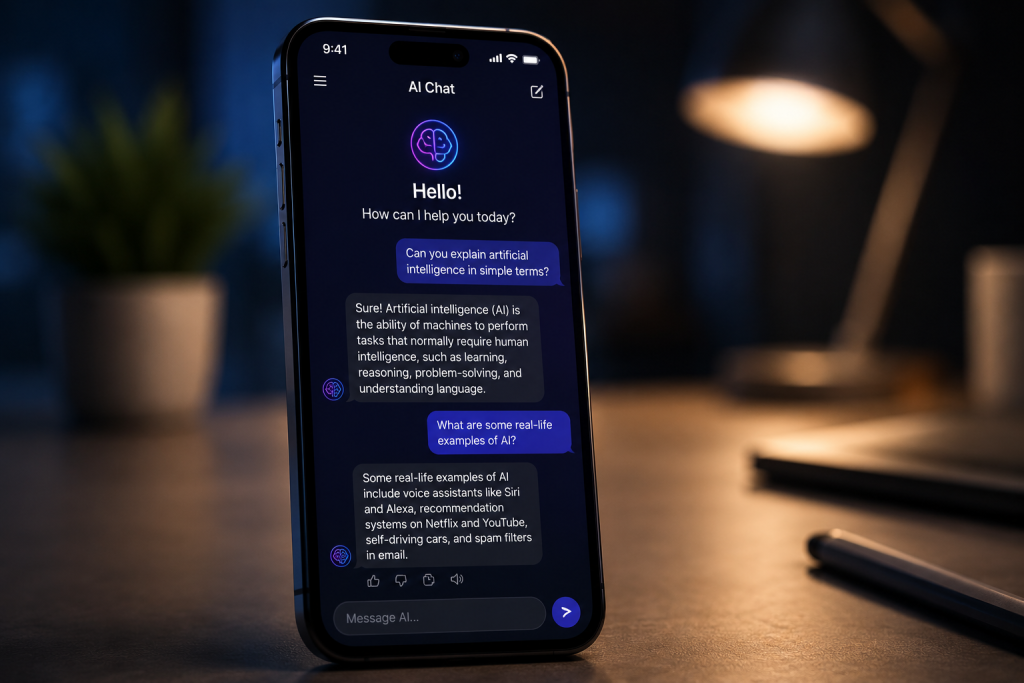
A standalone Siri app. Apple is rumored to be launching a dedicated Siri app with text-based conversations and saved chat history — essentially Apple’s answer to ChatGPT and Claude, built right into the iPhone.
A camera “Siri mode.” Reports point to a new fifth camera mode (alongside Photo, Video, Portrait, and Panorama): point your phone at something, tap, and ask. Visual Intelligence reads the scene and answers.
Smaller touches everywhere. A Wallet feature to turn physical tickets into digital passes, Safari automatically naming your tab groups, and the ability to route requests to other AI models like Claude and ChatGPT through new system extensions.
Notably, many of these were first shown off at WWDC 2024 — and then quietly delayed for years. This is Apple finally trying to ship what it promised.
Why Apple is paying a rival a billion dollars
To understand why this is such a big deal, you have to understand how rough the last two years were for Apple’s AI efforts.
Apple stood on stage in 2024 and promised a personalized, supercharged Siri. Then it missed deadline after deadline. The delays got bad enough that the company settled a $250 million class-action lawsuit on May 5, 2026, over features it had advertised but never delivered.
So this year’s strategy is a striking admission: rather than keep waiting on its own technology, Apple is leaning on Google’s. It’s not the move of a company comfortably leading in AI — it’s a company playing catch-up and willing to pay handsomely to close the gap. Under the agreement, Apple reportedly has until the end of 2026 to deliver, with the rebuilt Siri shipping inside iOS 27 this fall.
What Apple is going to do
I think apple company on june 8 lets watch what going happen to be lets wait and see. The most interesting thing here isn’t the technology, it’s the humility. Apple, the company that loves to control every layer of its products, just admitted it couldn’t win this one alone. That tells you how fast AI is moving — even the biggest player on earth would rather rent than fall further behind. Whether that’s smart or a sign of weakness is the real question worth debating.
What to watch for on June 8
A few things will tell us whether this is real progress or another round of promises:
Will Apple demo the new Siri live on stage, after the embarrassing no-show in 2024? How will it spin the Google partnership without undercutting its privacy brand? Will the features ship right away, or trickle out across smaller updates through next year? And is that standalone Siri app good enough to make people actually switch from ChatGPT?
The bottom line
WWDC 2026 looks set to be the most consequential Siri moment since the assistant launched back in 2011. After years of falling behind, Apple is betting big — and spending big — to catch up, even if that means building its flagship feature on a competitor’s foundation. Whether it pays off, we’ll start finding out on June 8.